
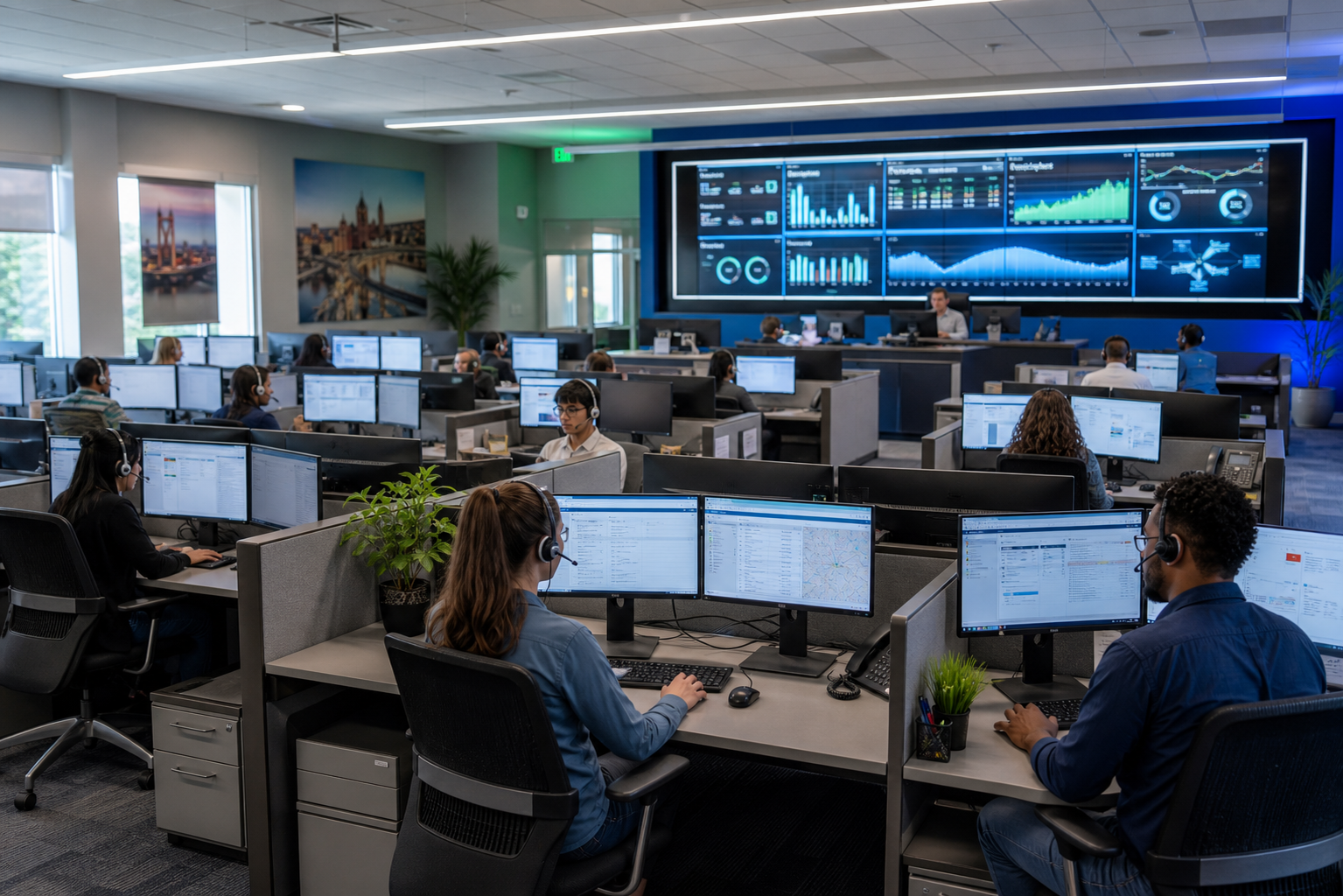
 When residents need emergency assistance, they know to call 911. But what happens when they need to report a pothole, ask about trash collection, report a broken streetlight, contact animal control, or simply determine which city department can help them?
For many local governments, the answer is 311.
A 311 service provides residents with an easy-to-remember number for non-emergency government services. Instead of expecting citizens to navigate a directory of city departments and telephone numbers, 311 can provide a centralized entry point into local government.
But a 311 number alone does not create an effective citizen-service operation. Behind those three digits, cities need communications technology capable of routing calls efficiently, managing queues, measuring service levels, handling high call volumes, and increasingly supporting communication channels beyond traditional voice calls.
For cities and counties still operating legacy PBXs, basic hunt groups, or departmental call centers, modernizing 311 can be an opportunity to fundamentally improve how residents interact with local government.
What Is 311?
The Federal Communications Commission designated 311 as an abbreviated dialing code for access to non-emergency police and other government services.
Unlike 911, 311 is not intended for emergencies.
Residents may use 311 for services such as:
- Potholes and road maintenance
- Missed trash or recycling collection
- Streetlight problems
- Code enforcement
- Animal control
- Parks and recreation information
- Water and utility questions
- Permits and licensing
- Parking concerns
- Non-emergency police services
- General city information
The exact services available through 311 are determined by the local government operating the service.
For residents, the concept is simple: instead of figuring out which department to call, call 311.
How Does a 311 Call Actually Reach the City or County ?
One of the most important things for municipalities to understand is that implementing 311 involves more than programming extension 311 into the telephone system.
311 is an N11 abbreviated dialing service.
Telephone carriers serving the jurisdiction must route 311 calls to a telephone number or telecommunications service designated by the local government.
A simplified call path might look like:
Resident → dials 311 → telephone carrier → designated city telephone number/SIP service → communications platform → IVR/contact center → appropriate agent or department
This distinction becomes particularly important when a city replaces an older PBX with a cloud communications platform.
The city must address both sides of the solution:
How does the public telephone network deliver 311 calls to the city or county ?
and
What happens to the call after they receive it?
Why Isn't a Traditional Hunt Group Enough for 311?
A small municipality or county may initially route 311 calls to a receptionist or simple telephone hunt group.
That can work at low volumes, but it provides limited information about the citizen experience.
For example, city administrators may have difficulty answering questions such as:
How many residents called 311 last month? How long did callers wait? How many abandoned their calls? What percentage of calls were answered within the city's service-level objective? What issues generate the most calls? When are peak periods? Which departments receive the most transfers? Did a resident have to call multiple times?
A modern contact center can make those questions measurable.
Moving 311 From a Phone Queue to a Citizen-Service Contact Center
A modern 311 operation can use a cloud contact-center platform such as RingCentral RingCX to provide capabilities well beyond basic telephone routing.
Instead of simply ringing several telephones, the city can create a structured citizen-service workflow.
For example:
311 → Welcome announcement → Citizen selects service → RingCX queue → appropriately skilled agent → service request or department
Calls can potentially be routed according to the type of request, language requirements, department, agent skills, time of day, or other business rules.
Supervisors can also gain visibility into queue activity and agent availability rather than discovering service problems through citizen complaints.
What Features Should a Modern 311 Contact Center Include?
A municipality planning a 311 modernization project should consider much more than whether the new system can answer a telephone call.
Important capabilities can include interactive voice response (IVR), intelligent call routing, skills-based routing, queue announcements, estimated wait information, callback options, call recording, quality management, real-time dashboards, historical reporting and analytics.
Digital communications are increasingly important as well. Depending on the city's requirements and selected platform, residents may be able to communicate through SMS, web chat, email or other digital channels rather than always making a telephone call.
That can transform 311 from a call center into a broader citizen engagement center.
311 and CRM or Service-Request Integration
One of the most valuable improvements can occur when the communications platform is integrated with the city's CRM, 311 management, or service-request system.
Consider a resident reporting a damaged street sign.
Without integration, an agent may answer the telephone, determine which department is responsible and transfer the caller.
A more advanced workflow can allow the agent to create a service request while interacting with the resident.
The request might contain information such as the citizen's contact information, location, problem category, department responsible, date and time reported, case number and current status.
The communication then becomes part of a trackable service request rather than disappearing when the telephone call ends.
Can RingCentral Be Used for a Municipal or County 311 Operation?
Potentially, yes.
A RingCentral architecture can separate normal communications from the more sophisticated requirements of a citizen-service center.
For example:
RingEX can provide cloud communications for city or county employees and departments.
RingCX can provide contact-center functionality for 311 agents and supervisors.
This can be particularly useful for municipalities migrating from systems such as Avaya, Mitel, ShoreTel/MiVoice Connect, Cisco or other legacy PBXs.
However, migrating the telephone system to RingCentral does not by itself establish 311 service.
The municipality still needs to coordinate the carrier-side routing of 311 and determine where those calls will terminate in the new environment.
That requirement should be identified early in the migration project rather than discovered during cutover.
What Happens When a 311 Center Receives Too Many Calls?
Call surges can occur because of severe weather, snowstorms, water outages, road closures, major events or other community-wide issues.
This is another area where a contact center can provide advantages over traditional PBX hunt groups.
A modern platform can provide queue announcements, overflow routing, supervisor visibility and potentially callback capabilities so residents do not necessarily have to remain on hold.
Cities can also use IVR announcements to address widespread issues before the caller reaches an agent.
For example:
"If you are calling about today's water-service interruption in the northwest portion of the city, press 1."
Providing accurate information early in the interaction can reduce unnecessary agent workload during major events.
Should 311 and 911 Use the Same Phone System?
They serve very different purposes.
911 is an emergency communications service with specialized public-safety requirements, infrastructure and operational considerations.
311 is a non-emergency government and citizen-services function.
A city evaluating 311 modernization should therefore avoid treating the project as simply an extension of its emergency 911 environment.
At the same time, cities should establish clear procedures for situations in which a resident calls 311 with an actual emergency. The 311 operation should have documented processes for directing emergency situations appropriately.
What About Other N11 Numbers?
311 is one of several abbreviated dialing codes residents may encounter.
911 is used for emergency services.
311 is used for non-emergency government services.
211 is commonly used for community information and referral services.
511 is associated with transportation and traveler information.
711 provides access to telecommunications relay services.
811 is associated with underground utility location and call-before-you-dig services.
Cities should therefore consider N11 dialing requirements during any major telecommunications migration rather than assuming that only 911 requires special attention.
What Should Cities Evaluate Before Modernizing 311?
The technology should follow the city's desired citizen experience.
Before selecting a platform, HCWT recommends documenting the existing 311 call flow and determining how residents should interact with the city in the future.
That assessment should include current call volumes, peak periods, departments receiving 311 requests, existing telephone numbers, carrier routing, IVR requirements, languages, staffing, reporting requirements, call recording policies, CRM or service-request integrations, SMS and digital-channel requirements, disaster recovery and business-continuity requirements.
It is also important to document what happens after a 311 interaction. Routing a resident to the correct employee is valuable, but creating, tracking and ultimately resolving the citizen's request is the larger objective.
Modernizing 311 Is About More Than Replacing Phones
A legacy PBX replacement can be the catalyst for a much larger improvement in citizen services.
Rather than simply recreating existing hunt groups in a cloud telephone system, municipalities can use the migration as an opportunity to reconsider how residents reach government, how requests are routed, how interactions are measured and how service requests are tracked.
A well-designed 311 environment can give residents one simple place to start, while giving city leadership substantially better visibility into how effectively the organization is serving its community.
How HCWT Can Help
High Country Workplace Technologies (HCWT) helps cities, counties, school districts and other public-sector organizations modernize legacy communications environments.
HCWT works with organizations operating platforms including Mitel, Avaya, ShoreTel/MiVoice Connect and other legacy PBXs, and can help evaluate migration to modern cloud communications and contact-center solutions including RingCentral RingEX and RingCX.
For a municipality evaluating 311, HCWT can help document the existing telecommunications environment, identify carrier and N11 routing requirements, design call flows, evaluate RingEX and RingCX architecture, address analog and paging requirements, plan number migration, and coordinate implementation.
The objective should not simply be to replace the city's telephone system.
It should be to create a communications environment that makes it easier for residents to reach their local government—and easier for the government to measure and improve the service it provides.
Please contact HCWT if they can assist with your 311 modernization.
This article was authoried by Jim Whitfield